Watercolor Dog Breeds Sublimation: An Embroidery Review
As a professional embroidery designer and product reviewer, I approach every new digital asset with a healthy dose of skepticism. The market is flooded with graphics that look stunning on a screen but fail catastrophically under the needle. When evaluating Watercolor Dog Breeds Sublimation for real-world application, my primary concern is not just aesthetic appeal, but technical viability. This collection falls under the category of Illustrations, which immediately signals a need for careful translation from pixel to stitch. Watercolor effects rely on soft gradients, bleeding edges, and translucency—qualities that are inherently difficult to replicate in thread. However, when adapted correctly, these designs offer a unique opportunity for custom apparel and personalized gifts that stand out in a saturated market.
First Impressions and Artistic Translation
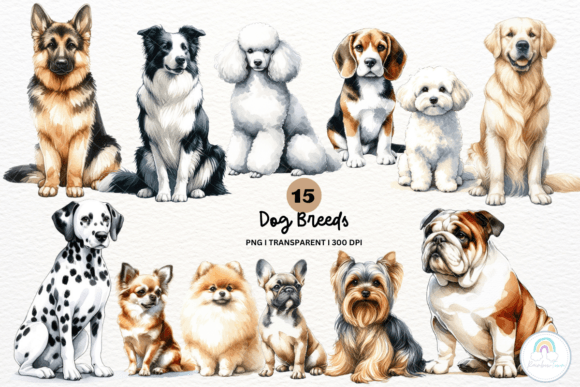
My initial assessment of this Watercolor Dog Breeds Sublimation collection focuses on the visual mood. The artwork possesses a gentle, organic personality that feels modern yet nostalgic. Unlike rigid vector art or cartoonish clipart, these illustrations carry an emotional weight that resonates with pet owners. For an Etsy seller or boutique owner, this emotional connection is currency. The layout of the breeds appears balanced, avoiding the cluttered look that often plagues multi-element designs. From a design perspective, the soft edges suggest that this would work beautifully as a centerpiece for nursery decor or a subtle accent on a tote bag design. However, as an embroiderer, I immediately began mentally converting those watercolor washes into stitch types. A true watercolor effect in machine embroidery requires a specific balance of fill stitch density and thread color blending to avoid a stiff, bulletproof patch of thread.
Real-World Application: The Custom Sweatshirt Test
To truly judge the utility of this design, I envisioned a specific client project: a custom embroidered sweatshirt for a dog rescue fundraiser. The goal was to create a premium handmade product that felt high-end rather than mass-produced. In this scenario, the Watercolor Dog Breeds Sublimation files serve as the foundational art. If using these as direct embroidery files, the stitch density must be evaluated carefully. Sweatshirt fleece has a textured surface that can swallow fine details. If the design relies heavily on running stitch outlines to define the watercolor shapes, those lines might get lost in the fabric nap. Conversely, if the design uses dense satin stitch borders to contain the fill areas, it could cause puckering on the stretchy knit fabric.
For this specific project, I would recommend testing the design on a scrap of similar weight fleece first. The artistic style lends itself perfectly to a left-chest placement or a centered back print, but the execution matters. If the digital file provides clean separation between color regions, it allows for better thread color matching. As a reviewer, I appreciate when illustration-based embroidery files account for the physical limitations of thread. A successful sweatshirt embroidery project using this art should feel soft to the touch, maintaining the drape of the garment while showcasing the breed’s character.
Navigating Fabric Limitations and Hoop Sizes
While the artistic merit of Watercolor Dog Breeds Sublimation is high, practical application requires caution regarding substrate choice. These illustrations likely feature intricate shading that demands a stable canvas. I would advise against using this design on highly textured fabrics like terry cloth or ribbed knits without significant modification. The subtle gradient transitions that make watercolor art beautiful will simply disappear into the valleys of a towel weave. Similarly, dark fabrics present a challenge; watercolor aesthetics rely on light passing through layers. On black or navy cotton, you lose that luminosity unless you employ a white underlay base, which adds stitch count and stiffness.
Hoop size is another critical factor. Detailed illustrations often suffer when scaled down for small hoops like 4x4. If you are planning baby embroidery or cap designs, verify that the smallest details remain distinct at reduced sizes. Tiny lettering or delicate facial features in the dog breeds may turn into indistinguishable blobs if compressed too much. For caps specifically, the curved surface distorts flat artwork. Unless the Watercolor Dog Breeds Sublimation files have been specifically digitized for curved surfaces, I would reserve them for flat applications like pillow covers, aprons, or framed hoop art. Always confirm the maximum dimensions of your embroidery file before committing to a production run.
Technical Considerations for Commercial Use
For creative entrepreneurs and small shop product developers, consistency is key. When incorporating these illustrations into commercial embroidery workflows, pay close attention to stabilizer selection. Because watercolor-style digitizing often involves varying stitch densities to mimic paint opacity, improper stabilization can lead to registration issues where colors gap or overlap incorrectly. A cut-away stabilizer is generally safer for these complex illustrations on apparel, providing permanent support for the variable tension. For tea towels or woven cottons, a tear-away might suffice, but only if the stitch density is moderate.
Furthermore, consider the longevity of the finished product. Items intended for frequent washing, such as baby clothes or kitchen linens, require robust construction. Ensure that any applique design elements included in the set have secure tack-down stitches and adequate edge finishing. Raw-edge applique can complement the watercolor aesthetic by adding texture, but it may fray over time. If durability is paramount for your customer base, opt for turned-edge or satin-stitched borders within the design assets. Always review the licensing terms associated with the digital embroidery file to ensure you have the right to sell finished products or use the art in printable mockups for marketing.
Enhancing Value Through Professional Presentation
The ultimate test of any embroidery design is its perceived value. Watercolor Dog Breeds Sublimation offers a distinct advantage here because it avoids the generic "clipart" look that devalues handmade goods. When presented correctly, these illustrations signal artistry and care. To maximize buyer engagement, I recommend creating high-quality mockups that accurately represent how the stitch texture interacts with the art style. Do not simply overlay a flat JPEG onto a shirt template. Instead, stitch out a sample and photograph it in natural light. Show the sheen of the rayon or polyester threads against the matte fabric. This transparency builds customer trust and sets realistic expectations.
Brand consistency also plays a role. If your shop specializes in rustic or vintage aesthetics, the softer palette of these watercolor breeds aligns perfectly. If your brand is neon and bold, this collection might feel disjointed. Think about how the thread colors you choose interact with the design's original intent. Using variegated threads can enhance the painterly effect, while solid colors provide clarity. Test both approaches. Remember that as an Etsy seller or maker, your reputation hinges on the quality of the final output. Taking the extra time to adjust tension, verify color contrast, and select the appropriate stabilizer transforms a digital download into a cherished personalized gift.
Final Verdict for Makers and Designers
In conclusion, Watercolor Dog Breeds Sublimation represents a versatile asset for the experienced embroiderer willing to respect the technical nuances of translating paint to thread. It excels in projects where emotion and aesthetics take precedence over industrial durability, such as holiday embroidery, keepsake blankets, and boutique apparel. However, success depends entirely on proper testing and material selection. Do not assume a file labeled for sublimation or illustration will stitch flawlessly without verification. Check the stitch density, inspect small details, and always run a sew-out on your intended fabric. By treating this design with professional scrutiny, you elevate it from a simple graphic to a signature element of your craft business portfolio. Whether used for a custom patch or a full-back jacket design, the potential for beauty is immense, provided the execution matches the vision.