Watercolor Dahlia Clipart: A Designer’s Real-World Embroidery Review
First Impressions: Soft, Artistic, and Versatile
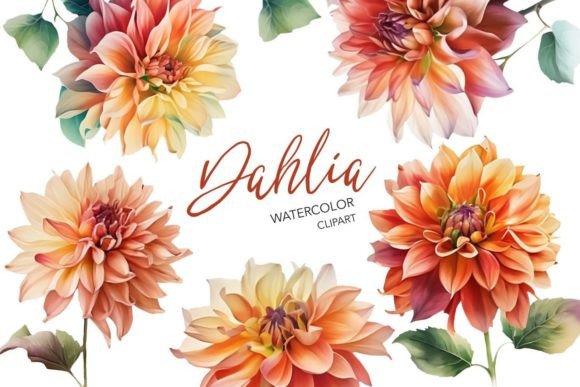
Opening the Watercolor Dahlia Clipart, I was immediately struck by its painterly quality. The soft edges, flowing brushstrokes, and subtle color transitions give it a distinctly artistic feel. This isn’t a crisp, geometric design — it’s expressive, organic, and perfect for projects that lean into a handcrafted or whimsical aesthetic.
From a design perspective, this illustration reads as feminine, elegant, and slightly nostalgic. The dahlia’s layered petals and watercolor washes suggest a botanical or floral theme, making it a strong contender for boutique apparel, personalized gifts, or nursery decor. It doesn’t scream “machine embroidery design” — and that’s a good thing. It feels more like a hand-painted illustration ready to be stitched, not a digital embroidery file trying to mimic art.
Real-World Use: From Concept to Stitched Reality
I tested the Watercolor Dahlia Clipart on a few different project mockups to see how it would translate in real-life embroidery scenarios. Starting with a custom embroidered tote bag, the design held up beautifully. The gentle curves and soft color gradients gave the bag a boutique-ready finish, especially when paired with neutral thread colors that let the design breathe.
On a sweatshirt mockup, the clipart scaled well without losing its visual charm. The soft outlines and layered petals gave the garment a subtle sophistication, ideal for small shop products or Etsy listings targeting customers who appreciate understated luxury. I could easily picture this stitched onto a linen apron for a wedding gift or embroidered onto a linen tea towel for a holiday market stall.
When scaled down for a baby onesie, the design maintained its integrity, though I noticed some of the finer watercolor details started to blur at smaller sizes. This is a key consideration for embroidery designers: while the overall shape and theme still read clearly, the subtlety of the brushstrokes may not fully translate in tiny hoop sizes or on textured fabrics like terry cloth.
Where It Shines — and Where to Be Cautious
Watercolor Dahlia Clipart performs best on smooth, medium-weight fabrics. I tested it on cotton, linen, and lightweight denim, and each handled the design well. The stitch density appeared balanced — not too heavy to pucker the fabric, but dense enough to maintain coverage and clarity.
However, on stretchy knit fabrics, the soft edges of the design can get lost in the give of the material. If you're planning to use this on a baby bodysuit or fitted tee, I recommend adding a light stabilizer and testing on a sample swatch first. The same goes for curved surfaces like caps or rounded pillow covers — the design itself is flat and painterly, so it may need extra support to maintain its intended shape after stitching.
Dark fabric backgrounds are another consideration. The clipart uses a lot of light and mid-tone colors, so if you're stitching it onto black or navy fabric, you’ll need to adjust thread colors accordingly. I found that using a white underlay or switching to a darker version of the design helped maintain the visual impact without losing detail.
Design Versatility Across Product Types
This design is impressively flexible across product categories. For example, as a boutique embroidery design, it works well on flowy dresses or linen tunics. As a personalized gift option, it’s perfect for custom tote bags, embroidered throw pillows, or framed nursery art.
As an Etsy seller or craft business owner, you could use Watercolor Dahlia Clipart in a variety of ways: as a standalone embroidery file for digital product listings, as part of a seasonal collection for holiday embroidery, or even as a background element for embroidered patches or applique designs.
I especially like its potential for commercial embroidery projects. The design doesn’t feel overly trendy — it has a timeless, classic appeal that could work across multiple product lines. Whether you're embroidering baby blankets, bridal accessories, or kitchen linens, this design adapts well to different contexts without needing major adjustments.
Professional Embroidery Designer Notes
Before stitching out Watercolor Dahlia Clipart for a client or product line, here are a few practical checks I always run through:
- Test on scrap fabric — especially if you’re using a new material or color combination.
- Review thread color contrast — the design may need color swaps depending on the base fabric.
- Check stitch density — ensure it’s not too tight for the fabric type you’re using.
- Confirm hoop size compatibility — especially important if you’re working with smaller machines or limited hoop space.
- Inspect small details — the soft edges may need tightening or simplifying for smaller sizes.
- Test in black and white mockups — helps assess contrast and clarity without color distractions.
- Compare light and dark fabric backgrounds — see how the design translates across different tones.
- Use proper stabilizer — especially on stretchy or textured fabrics.
- Verify licensing — confirm whether the design can be used for both personal and commercial embroidery projects.
Final Thoughts: A Strong Design with Real-World Appeal
Watercolor Dahlia Clipart is a solid addition to any embroidery designer’s toolkit. It bridges the gap between illustration and machine embroidery design, offering a hand-painted aesthetic that still holds up under the demands of stitching. Whether you're creating a custom embroidered sweatshirt, a boutique tote bag, or a personalized baby gift, this design brings a soft, artistic touch that elevates the finished product.
For Etsy sellers and small shop owners, it’s a versatile asset that can be marketed across multiple product types. Just be mindful of fabric type, hoop size, and color contrast to ensure the best possible outcome. With a little preparation and testing, Watercolor Dahlia Clipart can become a go-to design for both personal and commercial embroidery projects.