Watercolor Cute Love Bugs Clip Art Review
First Impressions: Whimsy Meets Stitch Reality
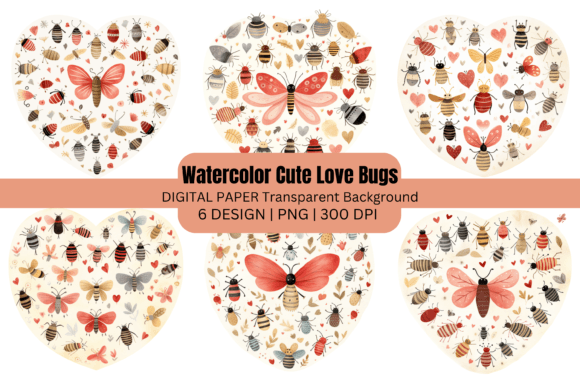
As an embroidery designer who has digitized and tested countless graphics, my first reaction to the Watercolor Cute Love Bugs Clip Art was a mix of delight and immediate technical assessment. Visually, these illustrations possess that soft, nostalgic charm that is currently dominating the handmade market. The watercolor aesthetic suggests gentle gradients and organic edges, which translates beautifully for print but requires careful interpretation for needle and thread. When evaluating this collection for real-world application, I am not just looking at pretty pictures; I am analyzing how those painted washes will convert into satin stitches, fill stitches, and running stitch outlines.
The mood here is undeniably sweet and approachable. For a craft business or Etsy seller, this style signals "handmade with love" rather than mass-produced precision. However, the transition from digital illustration to machine embroidery design is where the true test lies. The shapes are distinct enough to work as applique designs, yet the internal details suggest they could also stand alone as complex fill stitch motifs. My initial judgment is that these assets have high potential for personalized gifts and boutique branding, provided the digitizer respects the limitations of thread on fabric.
Real-World Application: The Custom Tote Bag Test
To truly evaluate the viability of Watercolor Cute Love Bugs Clip Art, I mentally placed it in a specific production scenario: creating a custom embroidered tote bag for a spring wedding favor line. Tote bags are a staple small shop product because they offer a large, stable canvas, but they also demand durability. In this context, the love bugs serve as the perfect decorative accent—small enough to be cost-effective in thread usage but detailed enough to justify a premium price point.
For this project, I would likely treat the clip art as a guide for an applique design. Using a solid cotton fabric for the bug bodies allows the watercolor effect to be mimicked through variegated thread colors in the satin stitch borders. This approach reduces overall stitch density, keeping the tote bag lightweight and flexible while maintaining the visual integrity of the original illustrations. If I were using these for sweatshirt embroidery instead, the strategy would shift. Knits require more stabilization and simpler lines. On a fleece crewneck, I would ensure the digital embroidery file includes adequate underlay to prevent the design from sinking into the pile, potentially simplifying the finest watercolor details into broader color blocks to maintain clarity.
Navigating Fabric Challenges and Technical Limits
While the aesthetic is versatile, practical experience dictates caution when applying Watercolor Cute Love Bugs Clip Art to certain substrates. The intricate nature of watercolor-style artwork often tempts digitizers to use excessive detail, which can be problematic on textured fabrics like linen tea towels or terry cloth kitchen towels. On these surfaces, tiny running stitch details can get lost or cause puckering if the stabilizer choice isn't precise. I always recommend testing on a scrap piece of the exact fabric texture before committing to a full production run.
Stretchy fabrics present another hurdle. If you are planning baby embroidery on onesies or stretchy jersey knits, the design must be optimized for movement. A dense, heavy interpretation of these love bugs could distort the garment or create a stiff spot that is uncomfortable for an infant. In such cases, verifying the stitch density is non-negotiable. Similarly, dark fabrics require careful thread color selection. Watercolor effects rely on subtle shading that may disappear against navy or black material. You may need to add a white underlay base or adjust the color palette specifically for dark garments to preserve the design’s personality.
Curved surfaces like caps are generally ill-advised for this specific style unless the design has been explicitly digitized for headwear. The distortion inherent in cap frames can warp the delicate proportions of cute illustrations, making them look unprofessional. Stick to flat hoops for the best results with this collection.
Elevating Product Value and Customer Trust
Using high-quality source material like Watercolor Cute Love Bugs Clip Art directly impacts the perceived value of your finished product. Customers can distinguish between generic, jagged stock designs and thoughtful, artistic embroidery. When the source illustration is cohesive and charming, the resulting embroidered patch or custom apparel feels intentional and curated. This consistency builds brand recognition for Etsy sellers and creative entrepreneurs. It tells the buyer that you care about the entire pipeline, from concept to stitch-out.
Furthermore, these illustrations lend themselves exceptionally well to printable mockups and digital product previews. Before you even thread a needle, you can create professional listing photos by overlaying the clip art onto blank garment templates. This helps validate market interest and secures pre-orders. However, transparency is key. Ensure your mockups accurately represent what the final embroidery project will look like. Over-promising the "watercolor" effect in a digital preview when the physical stitch-out is merely solid fills can lead to customer disappointment. Aligning your digital presentation with physical reality establishes long-term trust and reduces return rates.
Essential Designer Notes for Success
Before integrating Watercolor Cute Love Bugs Clip Art into your commercial embroidery workflow or personal hobby projects, adhere to these practical checkpoints:
- Verify Licensing Terms: Never assume usage rights. Confirm whether the license permits selling finished products, digital embroidery files, or both. Protecting your craft business starts with respecting intellectual property.
- Test Stitch Density: Run a sample on scrap fabric to check for puckering or stiffness. Adjust pull compensation and underlay settings based on your specific machine and thread tension.
- Check Hoop Size Compatibility: Ensure the design dimensions fit your available hoops without requiring excessive repositioning. Multi-hoop alignments increase the risk of registration errors on detailed illustrations.
- Evaluate Thread Color Contrast: Print a grayscale version of the design to see if the values hold up without color. If the design looks muddy in black and white, it may lack sufficient contrast for embroidery.
- Stabilizer Selection: Match the stabilizer weight to the fabric and design density. Cut-away stabilizers are usually safer for apparel and stretchy materials, while tear-away may suffice for stable tote bag designs.
- Mockup Accuracy: Use the original clip art for marketing, but clearly label images as "design inspiration" or "mockup" if they are not photos of actual stitched samples.
- Detail Inspection: Zoom in to 100% on the digital file. Any text smaller than 6mm or gaps thinner than 1mm may not stitch cleanly and should be modified or removed.
Ultimately, Watercolor Cute Love Bugs Clip Art offers a beautiful foundation for handmade products, holiday embroidery, and personalized gifts. Its success depends entirely on your willingness to bridge the gap between digital art and textile mechanics. By approaching these illustrations with a critical, maker-focused eye, you transform simple graphics into heirloom-quality merchandise that resonates with buyers and showcases your expertise as an embroidery professional.