Watercolor Football Player in Action Illustrations
First Impressions: Evaluating Niche Appeal for Digital Products
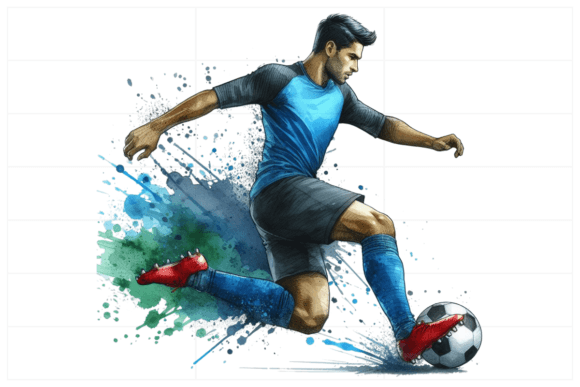
When sourcing a new graphic design asset for an upcoming seasonal shop update, my primary filter is always commercial viability over personal preference. Upon reviewing the Watercolor Football Player in Action file, the immediate impression is one of dynamic energy softened by an artistic medium that typically feels static. Unlike rigid vector sports graphics or aggressive collegiate branding, this illustration bridges a specific gap in the market. It possesses a hand-painted authenticity that appeals to buyers looking for something less corporate and more personal. The mood strikes a balance between competitive spirit and nostalgic warmth, making it distinct from standard clipart.
For Etsy sellers and creative entrepreneurs, this distinction matters. The visual personality suggests it will resonate strongly with audiences creating gifts for youth athletes, football moms, or retirement parties for coaches. It does not scream "professional league merchandise"; instead, it whispers "handmade celebration." This makes it an ideal candidate for small business branding within the sports niche, where customers are often seeking unique, non-infringing designs that feel custom-made rather than mass-produced. As a digital product, its value lies in this versatility—it is sporty enough for game day but elegant enough for nursery decor or stationery.
Real-World Application: Testing Across Sellable Formats
Before listing any asset in a creative marketplace, I run it through a practical stress test across multiple product types. A single Watercolor Football Player in Action graphic should ideally serve at least three distinct revenue streams. In my testing workflow, I first evaluate its performance as a sublimation design. Because watercolor relies on texture and gradient washes, it is naturally suited for polyester tumbler wraps and ceramic mug designs where ink absorption enhances the painterly effect. The movement captured in the player’s pose creates natural negative space, allowing for easy placement of monograms or team numbers without obscuring the focal point.
Next, I assess its utility for print-on-demand apparel. While bold vectors dominate the t-shirt market, there is a growing demand for softer aesthetics in women’s and children’s athletic wear. This illustration works exceptionally well for boutique-style tees where the goal is fashion-forward comfort rather than sideline identification. However, for Cricut users planning vinyl projects, caution is required. Watercolor edges can be notoriously difficult to weed. If you intend to sell this as an SVG design for cutting machines, you must ensure the file includes simplified cut lines or offer it primarily as a PNG design for print-then-cut features. Trying to force complex watercolor textures into intricate vinyl cuts often leads to customer frustration and negative reviews.
For digital creators and Canva template sellers, this asset shines in social media graphics and invitation suites. The organic edges blend seamlessly into textured backgrounds, making it perfect for "Game Day" Instagram stories or printable party banners. I found it particularly effective when paired with modern serif fonts for a sophisticated look, or playful handwritten scripts for a youth sports theme. This adaptability confirms its status as a high-value component for a broader design bundle.
Maximizing Listing Performance Through Strategic Presentation
A beautiful printable design fails if the thumbnail doesn't convert clicks. When preparing listings featuring the Watercolor Football Player in Action, visual hierarchy is paramount. This asset performs best in large-format previews where the brushwork details are visible. Avoid shrinking it down to tiny icon sizes in your main listing image; the texture gets lost, and it begins to look like low-resolution noise. Instead, use full-scale mockups that show the illustration in context. A framed wall art mockup or a lifestyle photo of a child wearing the design communicates perceived value far better than a plain white background render.
Furthermore, consider how this illustration supports brand consistency across your shop. If you are building a cohesive football collection, use this player as the anchor piece for your seasonal marketing. Its unique style can define the aesthetic of your entire Etsy product line, distinguishing your shop from competitors using generic stock vectors. When creating promotional visuals or Pinterest pins, allow the illustration to breathe. White space around the active figure emphasizes motion and prevents the design from feeling cluttered. This approach not only improves click-through rates but also builds trust by demonstrating professional presentation standards.
Critical Limitations: Where to Exercise Caution
No commercial design is universally applicable, and recognizing limitations protects your shop's reputation. While the Watercolor Football Player in Action is versatile, it has specific constraints. First, be wary of using it on dark backgrounds unless the file includes a solid white underbase layer. Watercolor transparency can cause colors to muddy or disappear entirely against black or navy fabrics, leading to poor print results. Always test print on both light and dark substrates before offering it as a digital download for apparel.
Additionally, avoid using this asset in text-heavy templates where readability is critical. The busy nature of an action pose can compete with headline copy, reducing legibility. It functions better as a secondary decorative element in these scenarios rather than the primary background. For sticker designers, verify that the outer edges are clean. Frayed watercolor borders can look messy when printed as die-cut stickers. If the edges are too soft, apply a subtle offset border in your design software to create a defined cutting path. Finally, never assume licensing rights. Even if an illustration looks perfect for your needs, always confirm the commercial license explicitly covers your intended end products, especially for print-on-demand and physical merchandise sales.
Seller Checklist: Pre-Launch Verification Steps
To ensure this asset translates into profitable products, follow this practical verification routine before publishing:
- Resolution Check: Verify the PNG is at least 300 DPI at the maximum intended print size. Upscaling watercolor often introduces pixelation that ruins the handmade aesthetic.
- Transparency Audit: Open the file in Photoshop or Procreate to check for stray pixels or incomplete erasing around the subject. Clean edges save customers time and reduce support tickets.
- Font Pairing Test: Mock up the design with at least three different font styles (serif, sans-serif, script) to ensure it pairs well with common typography used in your niche.
- Color Profile Validation: Convert RGB files to CMYK for print testing to identify any color shifts. Neon watercolor tones often dull significantly in print; adjust saturation beforehand if necessary.
- Mockup Diversity: Create previews showing the design on white paper, kraft paper, and fabric to demonstrate versatility to potential buyers.
- File Organization: Label files clearly (e.g., "Football_Player_Action_300DPI.png") rather than generic names. Professional file naming enhances the customer experience for handmade business owners who buy your assets.
By treating the Watercolor Football Player in Action as a business asset rather than just a pretty picture, you position your shop for sustainable growth. It offers genuine utility for crafters and designers, provided it is presented honestly and tested rigorously. In the crowded landscape of sports illustrations, quality execution and realistic application are what ultimately drive sales and repeat customers.